
Types of Collagen in Skin Supplements, Marine vs Bovine vs Porcine vs Collagen Peptides
In today’s beauty and wellness market, collagen has become one of the most talked-about ingredients in supplements for skin. From collagen drink formulations and collagen jelly sticks to collagen tablets and premium beauty collagen powders, consumers are increasingly looking for effective solutions that support youthful, healthy-looking skin from within.
As demand for skin products for glowing skin continues to rise, understanding the different types of collagen is becoming essential for brands, distributors, and consumers alike. Not all collagen sources are the same, and choosing the right collagen skin supplement can make a significant difference depending on individual beauty and wellness goals.
Marine Collagen – The Beauty-Focused Choice
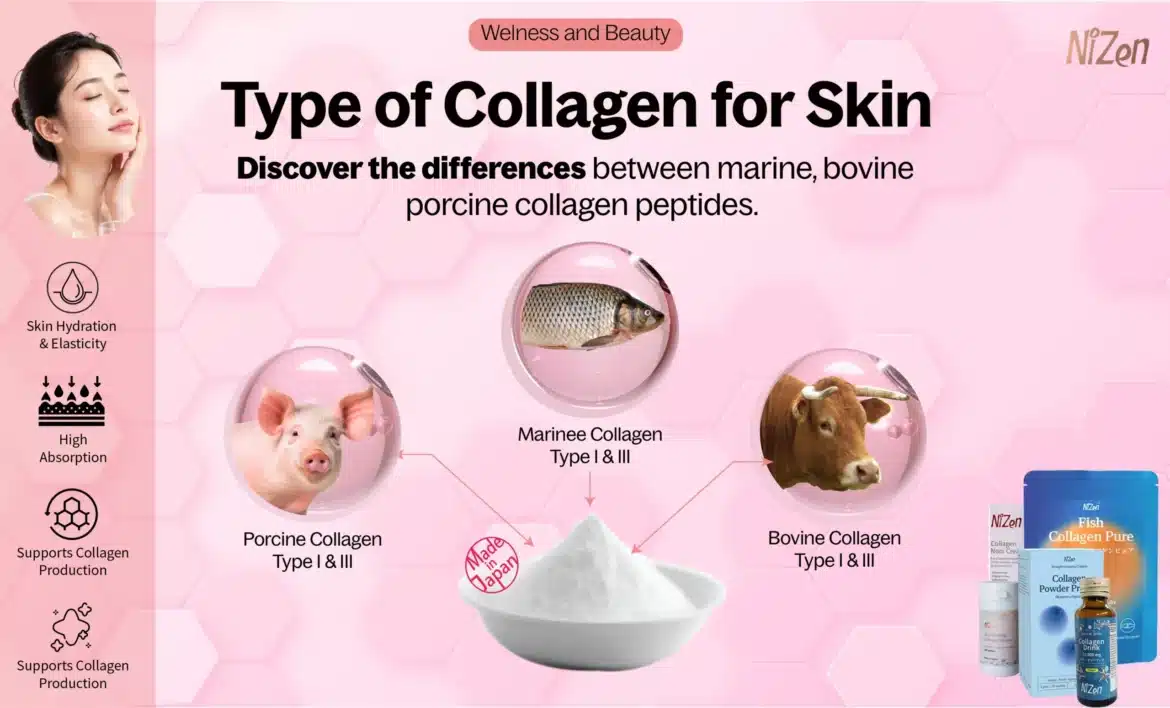
Marine collagen is sourced from fish skin and scales and is naturally rich in Type I collagen, the primary collagen found in human skin. Due to its smaller peptide size and high bioavailability, marine collagen is often considered one of the most preferred options in beauty collagen products.
Many premium Japanese skin care products and collagen drink formulations use marine collagen because it is closely associated with skin hydration, elasticity, and a smoother appearance. Studies suggest marine collagen peptides may support improved skin moisture and firmness when consumed consistently.
Bovine Collagen – Multi-Benefit Support
Bovine collagen is derived from cattle and contains both Type I and Type III collagen. While it supports skin health, it is also widely used for joint, muscle, and connective tissue support.
Because of its affordability and broader wellness benefits, bovine collagen is commonly found in collagen supplements for skin as well as sports nutrition and healthy aging formulations.
Porcine Collagen – Similar to Human Collagen
Porcine collagen is sourced from pigs and has a collagen structure that closely resembles human collagen. It can support skin elasticity and tissue repair, although its use is more limited in international markets due to dietary and cultural preferences.
Despite being less common in premium beauty categories, porcine collagen remains an effective source of collagen peptides for skin-focused formulations.
What Are Collagen Peptides?
Collagen peptides, also known as hydrolyzed collagen, are collagen proteins broken down into smaller amino acid chains for easier digestion and absorption. These peptides are widely used in collagen tablets, collagen jelly sticks, collagen powders, and ready-to-drink beauty supplements.
Research suggests that hydrolyzed collagen peptides may help stimulate the body’s natural collagen production while providing important amino acids such as glycine, proline, and hydroxyproline that support skin structure.
Which Collagen Is Best for Skin?
For consumers specifically seeking collagen supplements for skin, marine collagen is often favored because it delivers predominantly Type I collagen, the key structural protein responsible for skin firmness and appearance. Its smaller peptide size may also support better absorption compared to some other collagen sources.
However, the most important factor is consistency. Whether choosing marine, bovine, or porcine collagen, experts generally recommend hydrolyzed collagen peptides taken daily for at least 8–12 weeks as part of a complete beauty routine that includes proper hydration, nutrition, sun protection, and skincare.
As the global demand for Japanese skin care products, collagen drink innovations, collagen jelly sticks, and advanced collagen skin supplement formulations continues to grow, understanding collagen sources helps consumers and brands make more informed decisions in the evolving beauty and wellness market.