
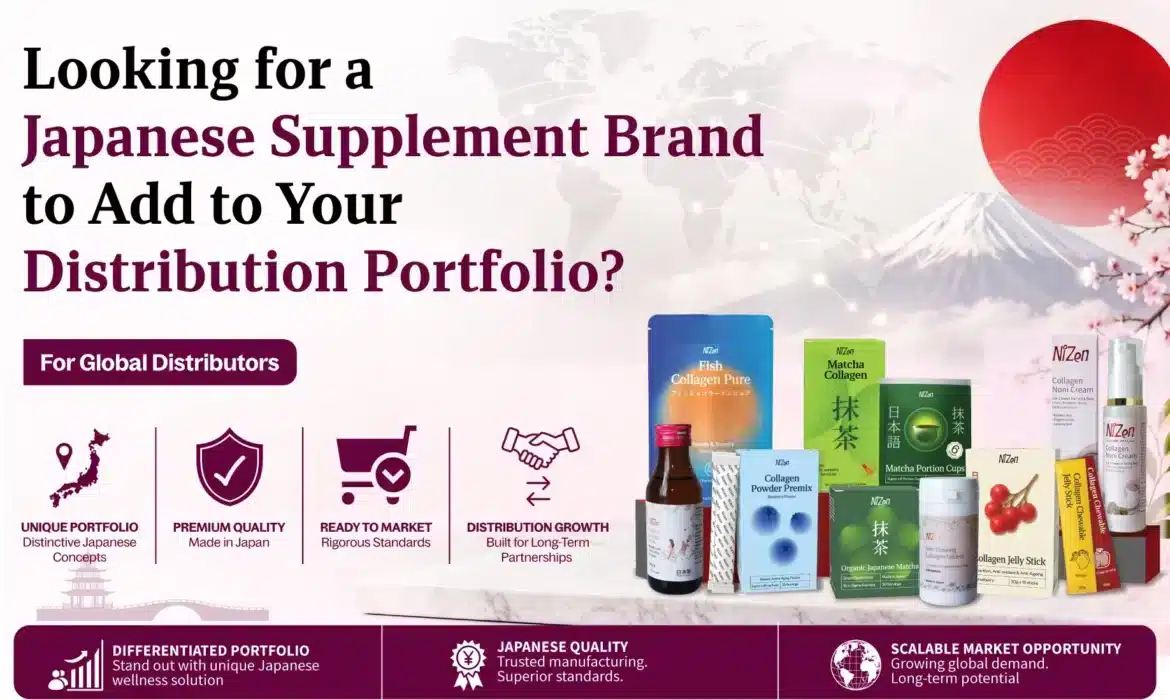
Looking for a Japanese Supplement Brand to Add to Your Distribution Portfolio?
For an established health and wellness distributor, adding a new brand is about more than finding another product to sell. The right brand should bring something different, fit your existing sales channels, and offer room for long-term growth.
This is where Made-in-Japan health and wellness products can create an opportunity.
Japan is known for its focus on quality, product development, and innovative wellness concepts. For distributors already working with supplements, nutraceuticals, beauty products, functional foods, or beverages, a Japanese brand can add a new and differentiated proposition to their portfolio.
Nizen offers ready-to-market health and wellness products manufactured in Japan and is expanding its international distribution network through established local partners. As a Japanese supplement brand, it provides a differentiated proposition for established distributors.
What Should You Look for in a New Supplement Brand?
A strong brand should give retailers and consumers a reason to choose it. This can come from the country of origin, product concept, ingredients, format, packaging, or brand positioning.
Made-in-Japan positioning can add another layer of differentiation, particularly in markets where Japanese products are associated with quality and innovation.
The products should also fit your existing distribution network. Depending on your business, Japanese wellness products may work across pharmacies, health stores, beauty retailers, supermarkets, specialty stores, and e-commerce platforms.
The right product depends on your customers and your market.
Made-in-Japan Products from Nizen
Nizen offers a growing range of finished health, beauty, and wellness products designed for international markets.
The portfolio includes marine collagen, matcha collagen, collagen jelly sticks, probiotic collagen drinks, Beauty and wellness supplements, and Japanese portion cup formats. As a Collagen Supplement Brand, Nizen offers several collagen formats for distributors looking to build a differentiated wellness portfolio.
Each category offers a different opportunity.
Marine collagen can complement existing beauty and wellness portfolios. Matcha Collagen combines Japanese matcha and marine collagen in one distinctive concept. Collagen Jelly Sticks offer a convenient alternative to traditional tablets and powders, while probiotic collagen drinks bring together beauty, wellness and functional beverage trends.
For distributors, these different formats can help create a more interesting Japanese wellness range instead of relying on a single product.
Why Choose a Ready-to-Market Brand?
Distributors can either develop their own private-label products or represent an existing brand.
Private label can be the right choice for companies that want to manage product development and branding themselves. But for distributors focused on importing, sales, retail placement, and market development, a ready-to-market brand can offer a more direct route to market.
With Nizen, distributors can focus on building the brand in their territory while working with an established Japanese product range.
Who Is Nizen Looking For?
Nizen is looking for established importers and distributors, not simply companies interested in occasional product purchases.
Potential partners include supplement and nutraceutical distributors, pharmacy and healthcare distributors, beauty distributors, functional food and beverage companies, supermarket suppliers, wellness chains, and businesses with strong e-commerce networks.
An existing sales network, local market knowledge, regulatory experience, retail relationships, and marketing capabilities can help build a successful partnership.
Start with What Fits Your Market
Not every product needs to be launched at once.
A distributor may begin with one or two products that fit its current customers and sales channels, then expand the range as the market develops.
A beauty distributor may start with collagen products. A functional beverage distributor may explore collagen drinks. A wellness or specialty food distributor may find matcha collagen or portion formats more suitable.
The right starting point depends on the local market.
Build a Long-Term Japanese Wellness Brand
Nizen’s goal is to build long-term distribution partnerships with companies that understand their market and have the network to develop a brand.
For the right distributor, this is more than adding another supplement. It is an opportunity to add Made-in-Japan health, beauty, and wellness products to an existing portfolio and develop a new category over time. These Japanese supplement distributor opportunities help established businesses introduce differentiated Japanese wellness products to their local markets.
Is Nizen Right for Your Distribution Network?
If your company already distributes health supplements, nutraceuticals, beauty products, functional beverages, or wellness products and you are looking to add a Made-in-Japan supplement brand to your portfolio, Nizen would be pleased to explore the opportunity.
Interested in adding Nizen to your distribution portfolio? Contact the Nizen team to discuss Japanese supplement distribution opportunities in your market.
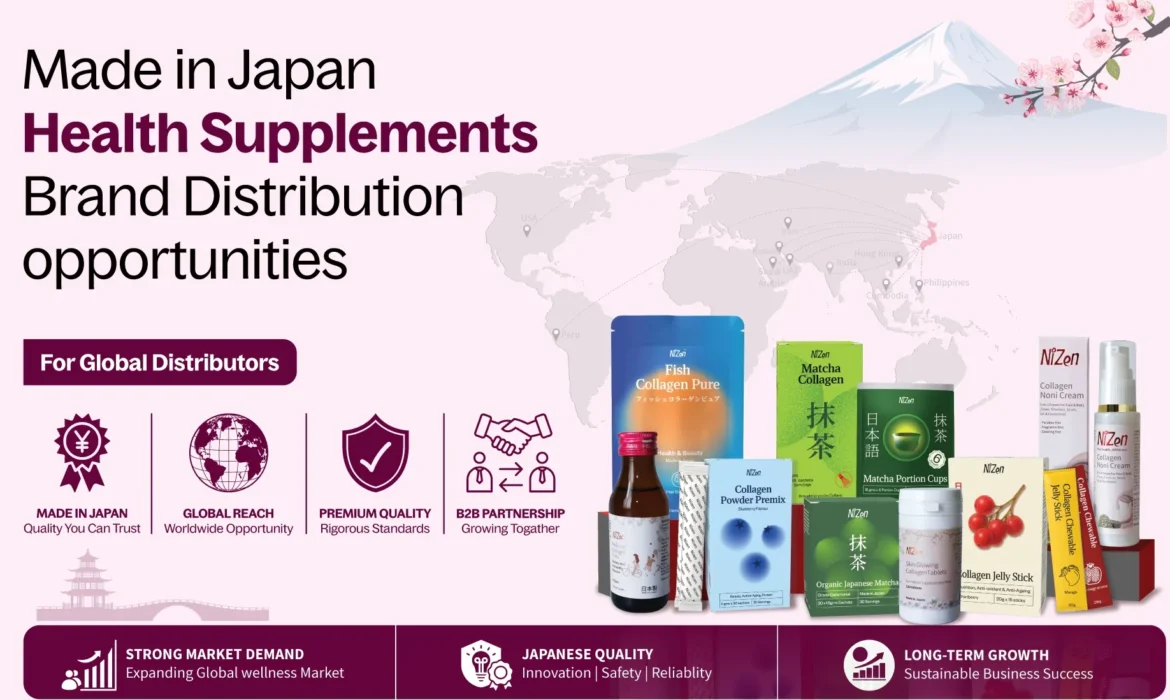
Japanese Health Supplement Brand Distribution Opportunities for Global Distributors
The global health and wellness market is growing, and established distributors are constantly looking for products that can bring something different to their existing portfolio. Made-in-Japan health and wellness products can offer that difference through Japanese quality, innovative product formats and growing interest in Japanese wellness.
Japan has a strong reputation for quality, product development and innovation across health, beauty and functional foods. For distributors, this creates an opportunity to introduce a premium Japanese proposition through existing channels such as pharmacies, health stores, beauty retailers, supermarkets, wellness chains and e-commerce.
What Does NiZen Offer International Distributors?
NiZen is a Japanese Health Supplement brand offering ready-to-market products for international markets. Its portfolio covers beauty, wellness, and functional products in formats designed for modern consumers. The range includes marine collagen, matcha collagen, collagen jelly sticks, probiotic collagen drinks, beauty and wellness supplements, and matcha portion cups.
These products can help distributors add something different to their existing range. For example, marine collagen fits naturally into beauty and wellness portfolios, while matcha collagen brings together two strong Japanese wellness concepts. Collagen jelly sticks and functional drinks offer convenient alternatives to traditional tablets, capsules, and powders. Matcha portion cups also provide a distinctive Japanese format for suitable retail and foodservice channels.
Why Choose Ready-to-Market Japanese Supplements for Distribution?
For established distributors, ready-to-market products can offer a simpler way to enter or expand within a category. Instead of developing a product and brand from the beginning, distributors can focus on what they already do best market development, sales, retail placement, local marketing and building distribution.
Who Can Become a NiZen Distribution Partner?
NiZen is therefore looking to work with established importers and distributors that already have a market presence. This could include nutraceutical and supplement distributors, pharmacy and healthcare distributors, beauty and cosmetic distributors, functional food and beverage companies, supermarket suppliers, wellness chains and businesses with strong e-commerce networks.
An existing sales network, local market knowledge, regulatory capabilities and retail relationships can help build a stronger long-term distribution partnership.
Where Is NiZen Expanding Its International Distribution Network?
NiZen is expanding its international distribution network and is open to discussions with suitable partners across the Middle East, Europe, Southeast Asia, Australia and New Zealand, North America and Latin America. The ideal product mix may vary from one market to another, so opportunities can be explored based on the distributor’s market, customers and sales channels.
Why Partner With NiZen, a Japanese Health Supplement Supplier?
For distributors looking to expand their portfolio, NiZen offers a combination of Made-in-Japan products, ready-to-market wellness concepts and a growing product range supported by product information, marketing materials and ongoing product development.
If your company already distributes health supplements, nutraceuticals, beauty products, functional foods or beverages and you are looking to add differentiated Japanese products to your portfolio, NiZen would be pleased to explore a potential distribution partnership in your market.
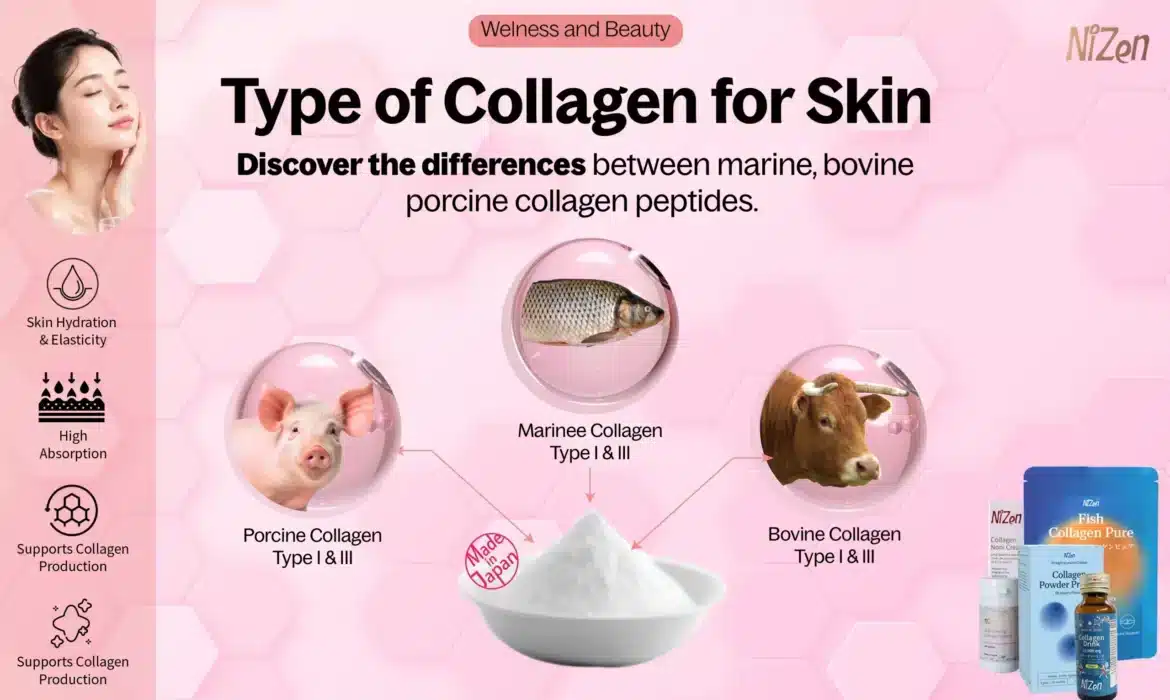
Types of Collagen in Skin Supplements, Marine vs Bovine vs Porcine vs Collagen Peptides
In today’s beauty and wellness market, collagen has become one of the most talked-about ingredients in supplements for skin. From collagen drink formulations and collagen jelly sticks to collagen tablets and premium beauty collagen powders, consumers are increasingly looking for effective solutions that support youthful, healthy-looking skin from within.
As demand for skin products for glowing skin continues to rise, understanding the different types of collagen is becoming essential for brands, distributors, and consumers alike. Not all collagen sources are the same, and choosing the right collagen skin supplement can make a significant difference depending on individual beauty and wellness goals.
Marine Collagen – The Beauty-Focused Choice
Marine collagen is sourced from fish skin and scales and is naturally rich in Type I collagen, the primary collagen found in human skin. Due to its smaller peptide size and high bioavailability, marine collagen is often considered one of the most preferred options in beauty collagen products.
Many premium Japanese skin care products and collagen drink formulations use marine collagen because it is closely associated with skin hydration, elasticity, and a smoother appearance. Studies suggest marine collagen peptides may support improved skin moisture and firmness when consumed consistently.
Bovine Collagen – Multi-Benefit Support
Bovine collagen is derived from cattle and contains both Type I and Type III collagen. While it supports skin health, it is also widely used for joint, muscle, and connective tissue support.
Because of its affordability and broader wellness benefits, bovine collagen is commonly found in collagen supplements for skin as well as sports nutrition and healthy aging formulations.
Porcine Collagen – Similar to Human Collagen
Porcine collagen is sourced from pigs and has a collagen structure that closely resembles human collagen. It can support skin elasticity and tissue repair, although its use is more limited in international markets due to dietary and cultural preferences.
Despite being less common in premium beauty categories, porcine collagen remains an effective source of collagen peptides for skin-focused formulations.
What Are Collagen Peptides?
Collagen peptides, also known as hydrolyzed collagen, are collagen proteins broken down into smaller amino acid chains for easier digestion and absorption. These peptides are widely used in collagen tablets, collagen jelly sticks, collagen powders, and ready-to-drink beauty supplements.
Research suggests that hydrolyzed collagen peptides may help stimulate the body’s natural collagen production while providing important amino acids such as glycine, proline, and hydroxyproline that support skin structure.
Which Collagen Is Best for Skin?
For consumers specifically seeking collagen supplements for skin, marine collagen is often favored because it delivers predominantly Type I collagen, the key structural protein responsible for skin firmness and appearance. Its smaller peptide size may also support better absorption compared to some other collagen sources.
However, the most important factor is consistency. Whether choosing marine, bovine, or porcine collagen, experts generally recommend hydrolyzed collagen peptides taken daily for at least 8–12 weeks as part of a complete beauty routine that includes proper hydration, nutrition, sun protection, and skincare.
As the global demand for Japanese skin care products, collagen drink innovations, collagen jelly sticks, and advanced collagen skin supplement formulations continues to grow, understanding collagen sources helps consumers and brands make more informed decisions in the evolving beauty and wellness market.

Combining Collagen Supplements with a Skincare Routine: Dosage, Timing, Vitamin C & Lifestyle Factors
The beauty industry is increasingly moving toward a “beauty from within” approach, where collagen supplements for skin are combined with topical skincare and healthy lifestyle habits to support long-term skin wellness. From collagen drinks and collagen powders to advanced Japanese skin care products, consumers are looking for complete routines that help maintain hydration, elasticity, and a youthful appearance.
While many people focus on finding the best collagen supplements, experts emphasize that collagen works most effectively when supported by proper nutrition, skincare, and daily wellness practices.
What Is the Recommended Collagen Dosage for Collagen Supplements for Skin?
Research suggests that daily collagen intake between 2.5g and 10g of hydrolyzed collagen peptides may help support skin hydration, elasticity, and overall skin appearance. Many collagen supplements for skin, including collagen powders, collagen tablets, and ready-to-drink beauty collagen products, are formulated within this recommended range.
Consistency is often considered more important than high dosage. Regular daily intake over several weeks may provide better results than occasional use.
Does Timing Matter When Taking Collagen Skin Supplements?
One of the most common questions about collagen skin supplements is whether they should be taken in the morning or at night. Current evidence suggests there is no strict “best” time to take collagen. The key factor is maintaining consistent daily consumption.
Many consumers prefer collagen drinks with breakfast, while others take collagen supplements before bedtime as part of their wellness routine. The timing itself is generally less important than regular long-term use.
Why Vitamin C Is Essential for Collagen Supplements for Skin
Vitamin C plays a critical role in natural collagen production. It acts as a necessary cofactor in collagen synthesis, helping the body form stable collagen fibers that support healthy skin structure.
For this reason, many beauty collagen products combine hydrolyzed collagen peptides with Vitamin C. Consumers may also benefit from pairing collagen supplements with Vitamin C-rich foods such as citrus fruits, berries, and vegetables.
Pairing Collagen supplements with a Skincare Routine
Collagen supplements should complement, not replace, a proper skincare routine. Many premium Japanese skin care products focus on hydration, barrier protection, antioxidant support, and sun protection, creating an environment that helps preserve the skin’s natural collagen.
A complete beauty routine may include:
- Daily collagen supplements for skin
- Vitamin C serums and antioxidant skincare
- Sunscreen protection (SPF)
- Adequate hydration
- Quality sleep and recovery
- Balanced nutrition rich in protein
- Reduced smoking and excessive alcohol consumption
These lifestyle factors can help reduce collagen breakdown while supporting overall skin health.
Can Skin Collagen Supplements Support Brighter-Looking Skin?
Many consumers searching for skin whitening supplements are often looking for products that promote brighter, healthier-looking skin. While collagen itself is not a whitening ingredient, improved hydration, elasticity, and skin barrier support may contribute to a smoother and more radiant appearance over time.
When combined with Vitamin C, antioxidants, healthy nutrition, and proper skincare, collagen supplements may become part of a broader beauty strategy focused on maintaining glowing, healthy skin.
What Results Can Consumers Expect from the Best Collagen Supplements?
Visible results vary depending on age, lifestyle, dosage, and product quality. However, studies generally suggest that consistent collagen supplementation may begin supporting skin hydration within a few weeks, with improvements in skin texture and elasticity becoming more noticeable after 8–12 weeks of regular use.
As demand for the best collagen supplements and advanced Japanese skin care products continues to grow worldwide, combining internal nutrition with external skincare is becoming one of the most popular approaches to modern beauty and healthy aging.
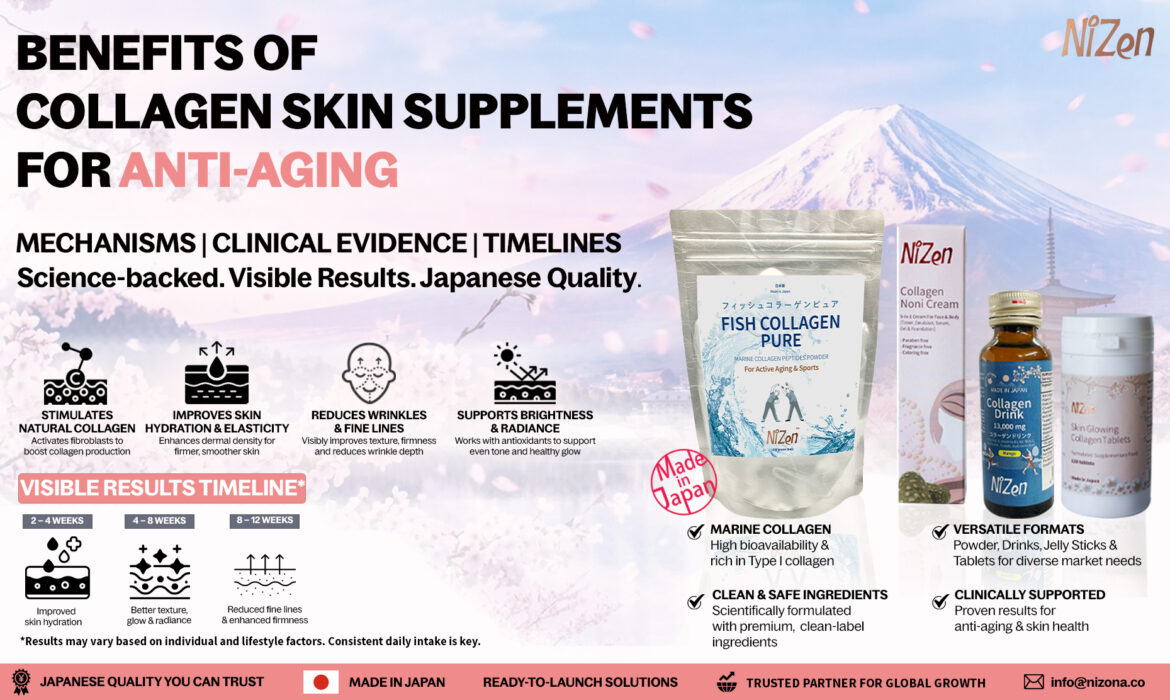
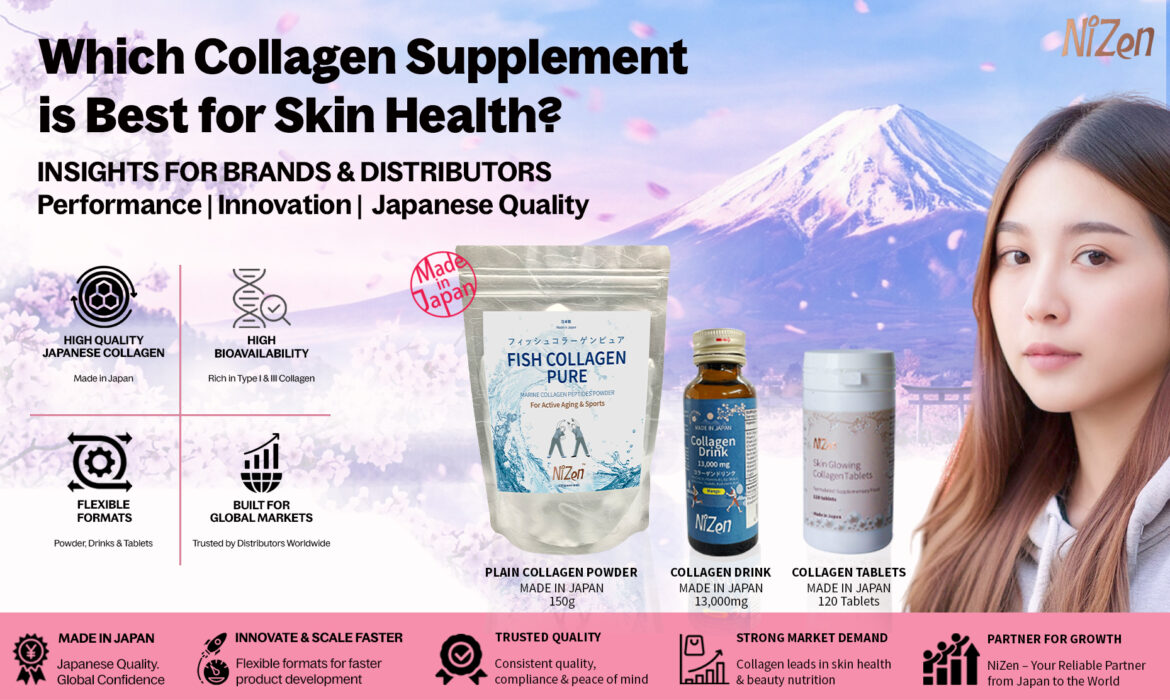
Which Collagen Supplement is Best for Skin Health?
The demand for the best collagen supplements for skin is growing rapidly across global markets. With multiple formats such as powders, tablets, and ready-to-drink solutions, brands and distributors must carefully evaluate which format delivers both performance and scalability. Understanding the role of collagen powder for skin and collagen drinks for skin is essential for building competitive, high-demand product portfolios.
Among available formats, collagen powder is leading due to its flexibility in formulation and ease of use in beverages, sachets, and beauty drinks. It allows brands to innovate and scale efficiently, especially when working with a reliable collagen powder bulk supplier.
From a distribution standpoint, collagen powder enables:
- Faster product launch
- Flexible dosage formats
- Easier localization across markets
This is why working with a reliable bulk supplier is not optional—it directly impacts product consistency, scalability, and regulatory alignment.
At the same time, the best collagen supplements for skin category continues to dominate skin health due to its high bioavailability,rich type 1&3 collagen content and strong consumer trust. It is particularly effective for improving skin elasticity, hydration, and overall appearance.
In parallel, skin whitening supplements are evolving into skin-brightening solutions, combining collagen with antioxidants for enhanced results.
From a B2B standpoint, there is a clear direction in the market:
- Collagen supplement leads in performance and consumer trust
- Collagen skin powder leads in innovation and scalability
- Skin whitening supplements drive demand in specific high-growth regions
The most successful brands are those that combine high-quality sourcing, smart formulation, and clear positioning.
In today’s competitive landscape, collagen is not just an ingredient—it is a platform for product innovation and brand growth.
Among all sources, collagen supplement stands out as the most preferred for skin-focused applications.
Collagen is leading demand across premium global markets, making it a strategic choice for brands targeting visible skin benefits.
Where NiZen adds value In
For distributors looking to enter or expand in the collagen segment, the biggest bottlenecks are:
- Product development time
- Regulatory uncertainty
- Consistent quality sourcing
NiZen addresses this by offering:
- Ready-to-launch Made-in-Japan collagen products manufactured under strict quality control and consistent quality standards.
- Proven formulations aligned with global demand
- Multiple formats (powder, drinks, tablets)
- Support for international distribution and branding
This significantly reduces:
- Time to market
- Product risk
- Operational complexity
- Product development time
- Regulatory uncertainty
- Consistent quality sourcing
This significantly reduces:
- Time to market
- Product risk
- Operational complexity
Distributor Success Story: NiZen Eurasia (CIS Region)
In the CIS region, NiZen Eurasia has implemented a doctor-led distribution approach to position NiZen Plain Collagen Powder as a functional health and skin-support solution, rather than a generic supplement.
Instead of competing in a highly competitive retail channels, the focus has been on:
- Medical professionals
- Clinics and wellness centers
- Practitioner-led recommendations
This immediately shifts the product from commodity to credibility-driven solution.
Want to Build a Similar Distribution Model?
If you are a distributor looking to:
- Enter the collagen category
- Build a clinic-driven or premium positioning strategy
- Launch quickly with proven products
NiZen provides a ready-to-market products range backed by Japanese quality standards.
Explore distributorship opportunities:
Connect directly to discuss your market strategy at info@nizona.co
Product Questions:
1. Which collagen format is best for product development?
Collagen powder for skin offers the most flexibility for innovation, especially in functional beverages and beauty-from-within products.
2. Why is marine collagen supplement preferred for skin products?
Due to its high bioavailability and Type I collagen content, it delivers better results for skin-focused applications.
3. Are skin whitening supplements still in demand?
Yes, but the positioning has shifted toward skin brightening and radiance, especially in Asia and the Middle East.
4. What industries can use collagen skin supplements?
Nutraceuticals, food & beverage, cosmetics, dermatology, and sports nutrition sectors are actively using collagen.
5. How important is sourcing in collagen products?
Very important. Working with a reliable collagen powder bulk supplier ensures product quality, consistency, and regulatory compliance.
6. Can collagen be combined with other ingredients?
Yes, collagen blends well with vitamins, antioxidants, and functional actives, making it ideal for advanced formulations.